Diamond Guide
A Guide To Choosing The Right Diamond
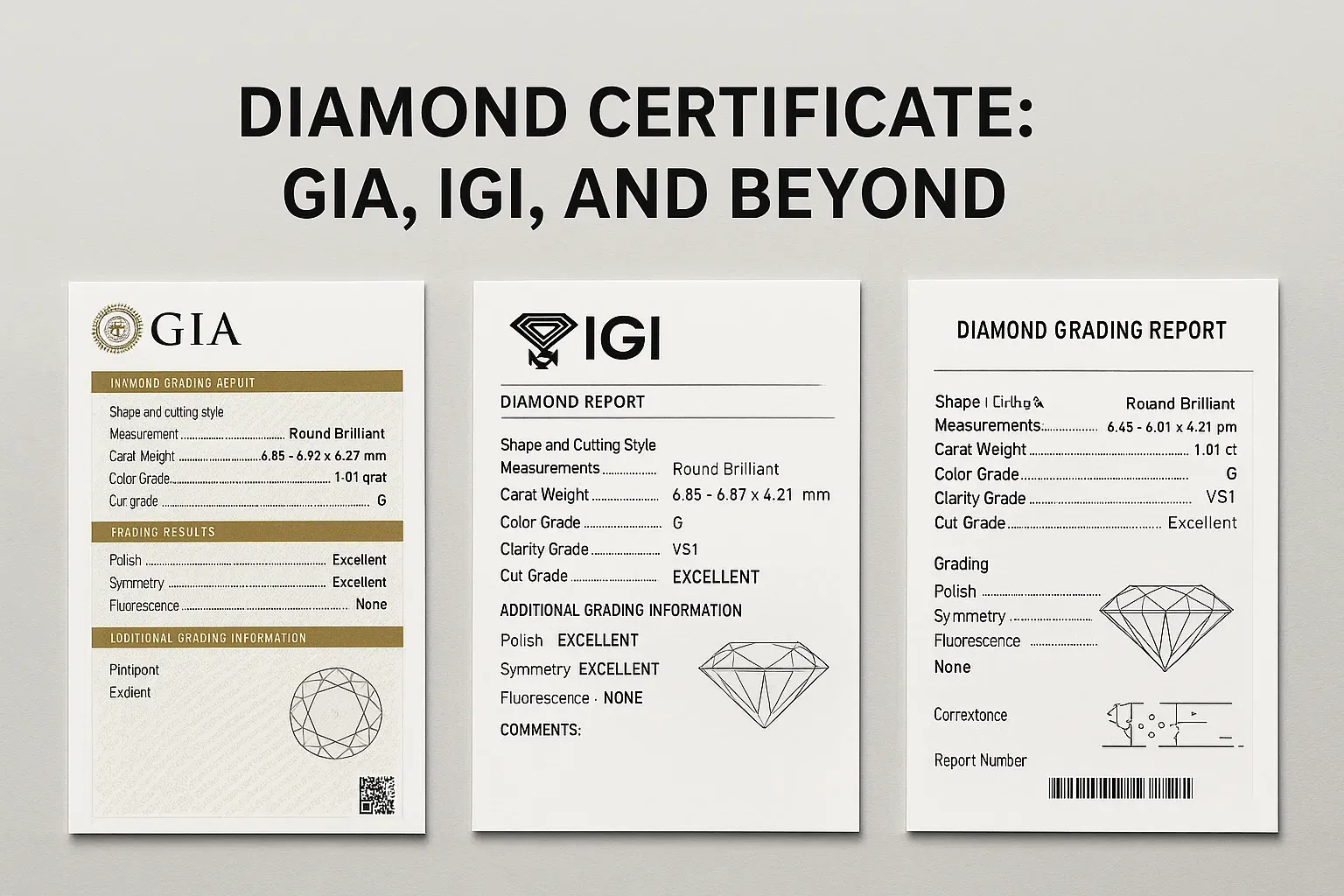
Choosing a diamond is about far more than certification grades or carat size.
True beauty comes from how a diamond performs in real life — its brilliance, transparency, proportions, balance, and overall visual presence.
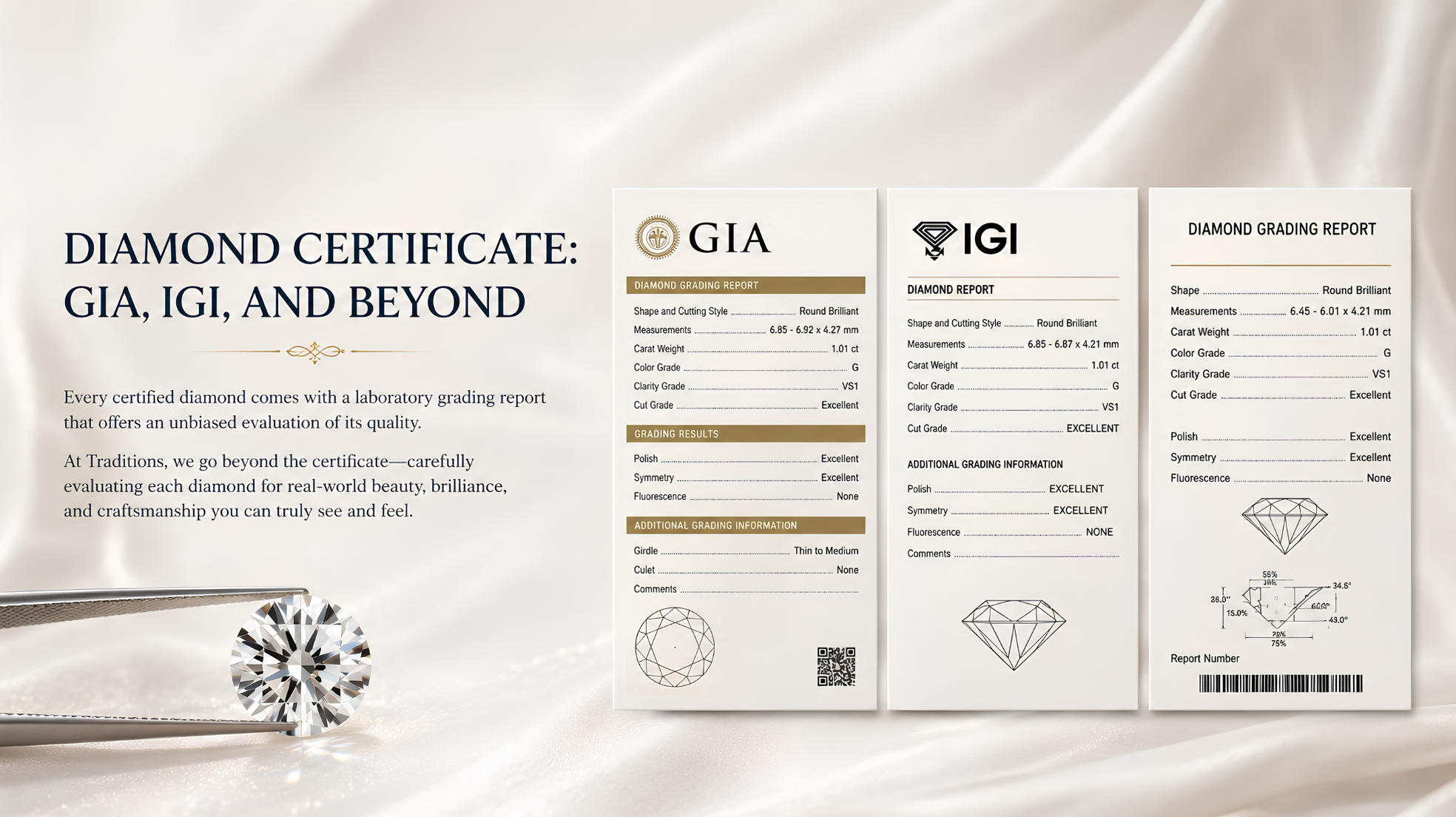
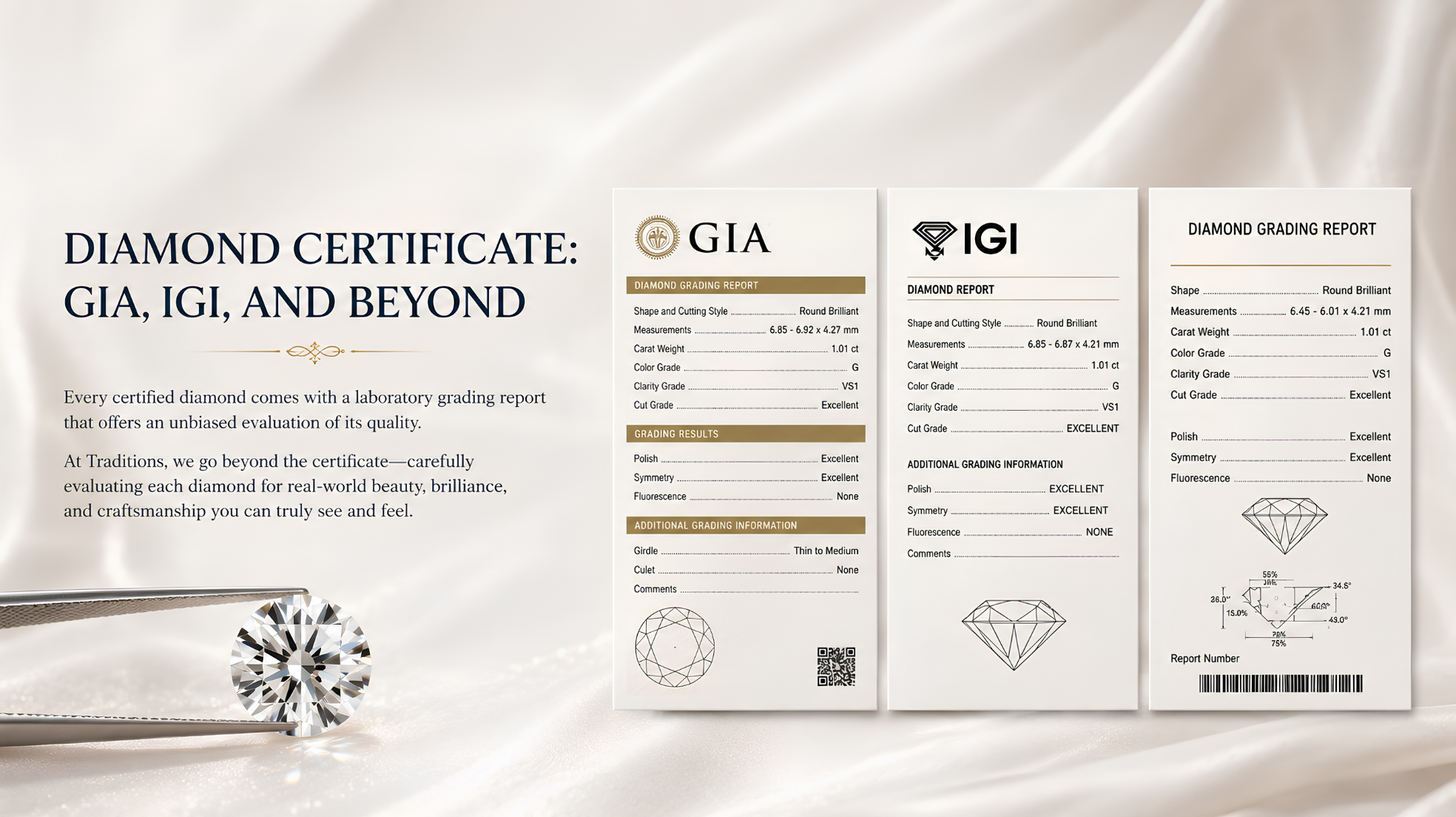
At Traditions by Pooja Backliwal, every diamond is carefully evaluated beyond standard grading reports. We examine technical and visual factors that are often overlooked by buyers — and sometimes not fully reflected within certificates themselves.
Our selection process focuses not just on grades, but on how exceptional a diamond actually looks.
Beyond The 4Cs
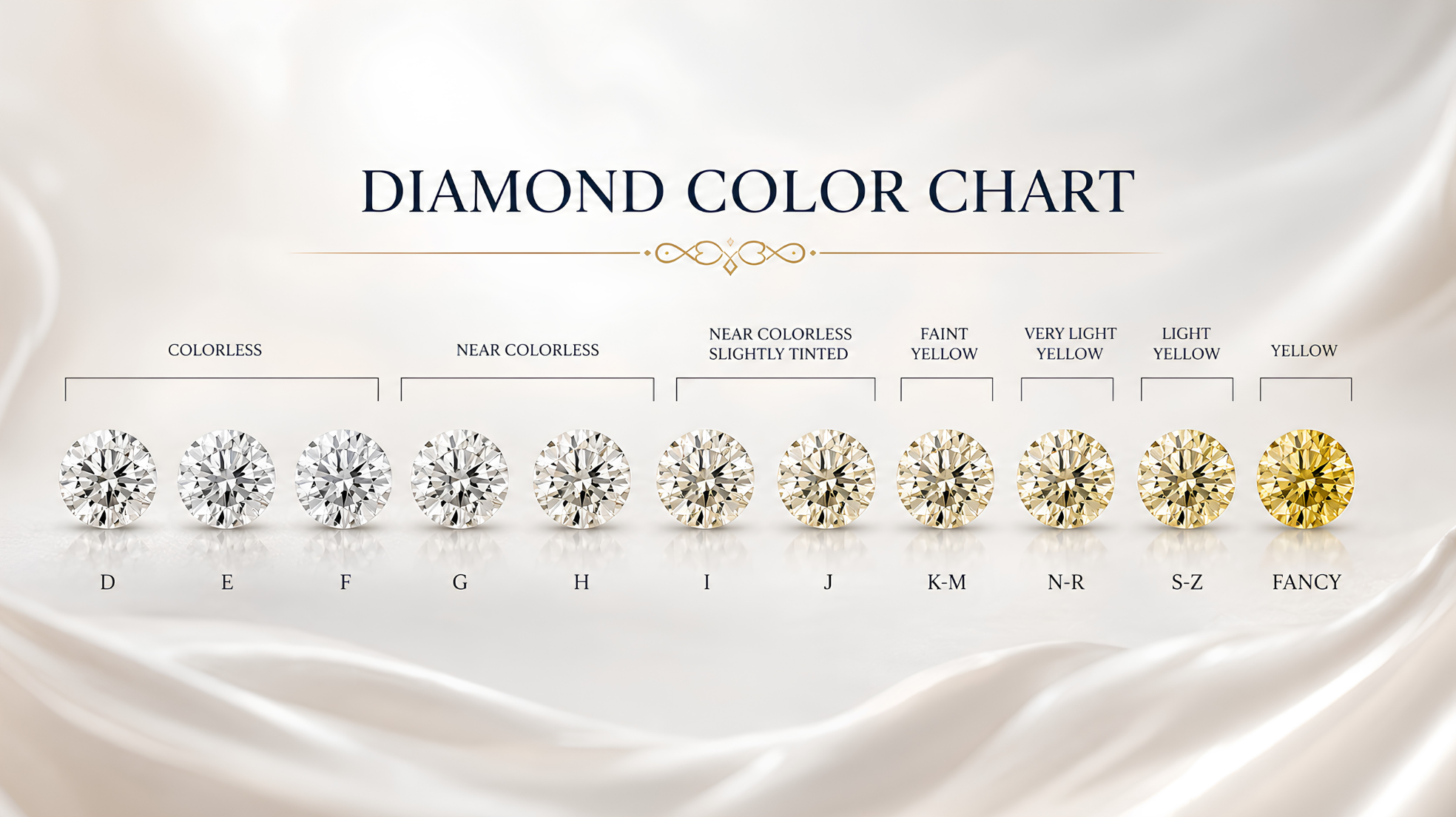
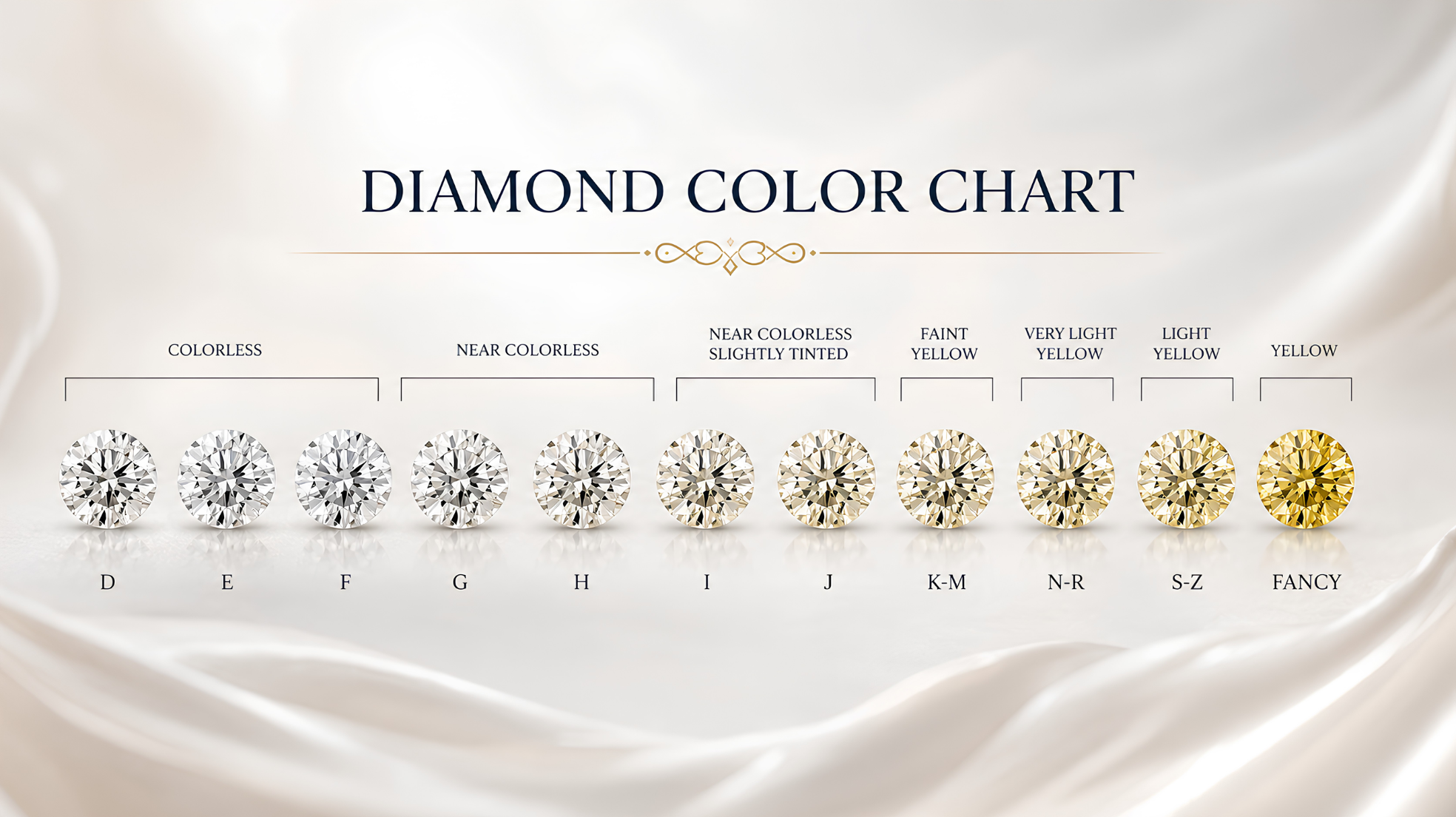
The 4Cs — Cut, Color, Clarity, and Carat Weight — form the foundation of diamond grading.
However, experienced diamond selection goes much deeper.
At Traditions, we additionally evaluate:
- Ratio
- Table %
- Depth %
- Crown Height
- Pavilion Angle
- Star Length
- Lower Half
- Girdle Thickness
- Culet
- Polish
- Symmetry
- Fluorescence
- BGM characteristics
- Inclusion placement
- Transparency
- Bow-tie effect
- Face-up spread
- Light performance
- Real-world brilliance
These details collectively influence how beautiful, lively, and luxurious a diamond appears.
Cut
The Most Important Factor
Cut determines how beautifully a diamond reflects light.
A well-cut diamond appears:
- brighter
- sharper
- more lively
- more balanced
Even a high-color, high-clarity diamond can appear dull if proportions are poor.
At Traditions, we closely evaluate:
- brilliance
- fire
- scintillation
- contrast pattern
- light return
- symmetry
- overall visual performance
We prioritize diamonds that look exceptional to the eye — not just on paper.
Table & Depth
Why Proportions Matter
Two diamonds with the same carat weight can appear completely different depending on proportions.
Table %
The table is the large flat facet on top of the diamond.
It influences:
- brilliance
- fire
- spread
- overall balance
Depth %
Depth affects:
- visible size
- light performance
- sparkle
- face-up appearance
Diamonds that are too deep may appear smaller. Diamonds that are too shallow may lose brilliance and life.
At Traditions, we carefully balance proportions for optimal beauty.
Ratios & Shape Balance
Especially Important For Fancy Shapes
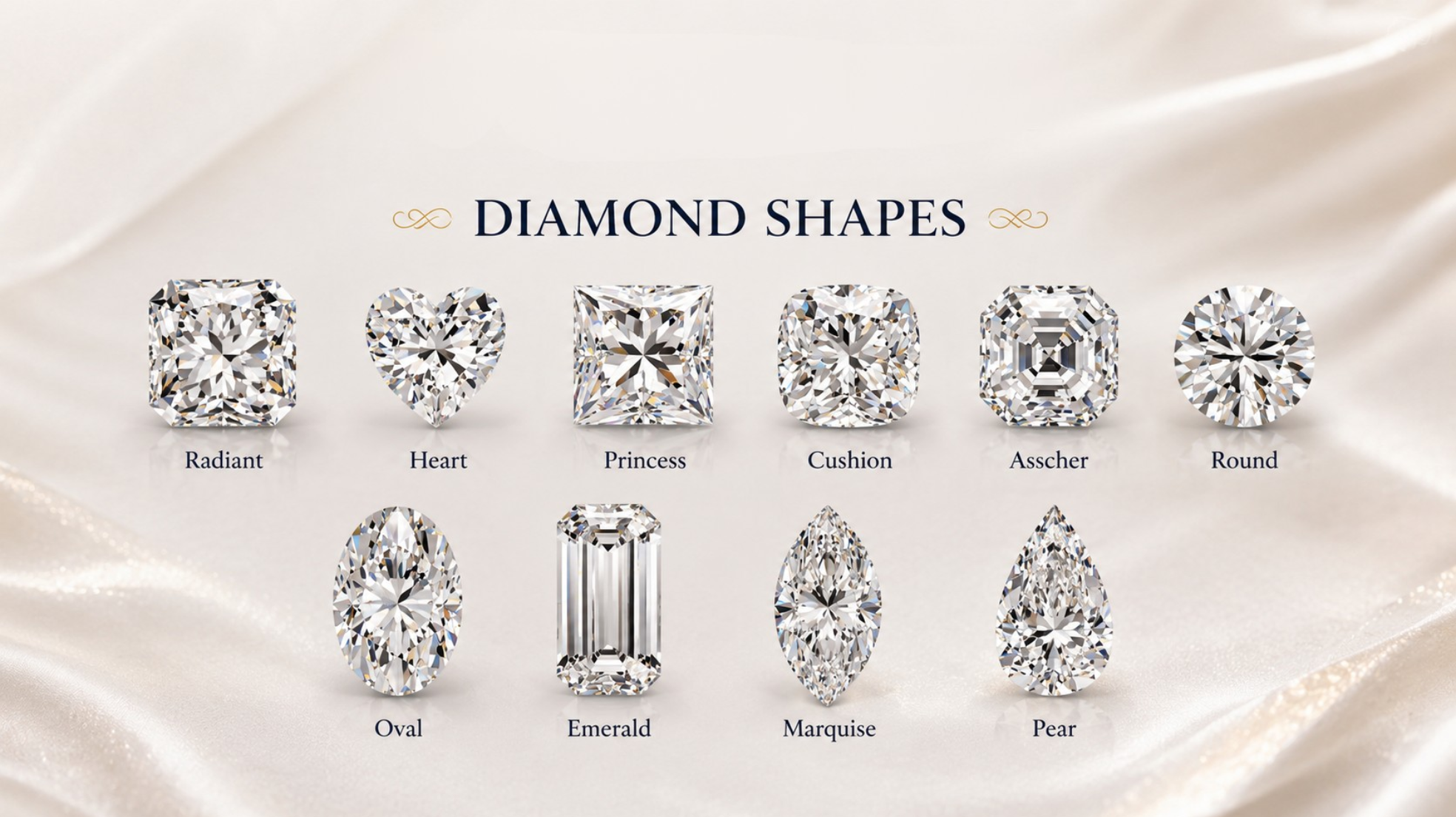
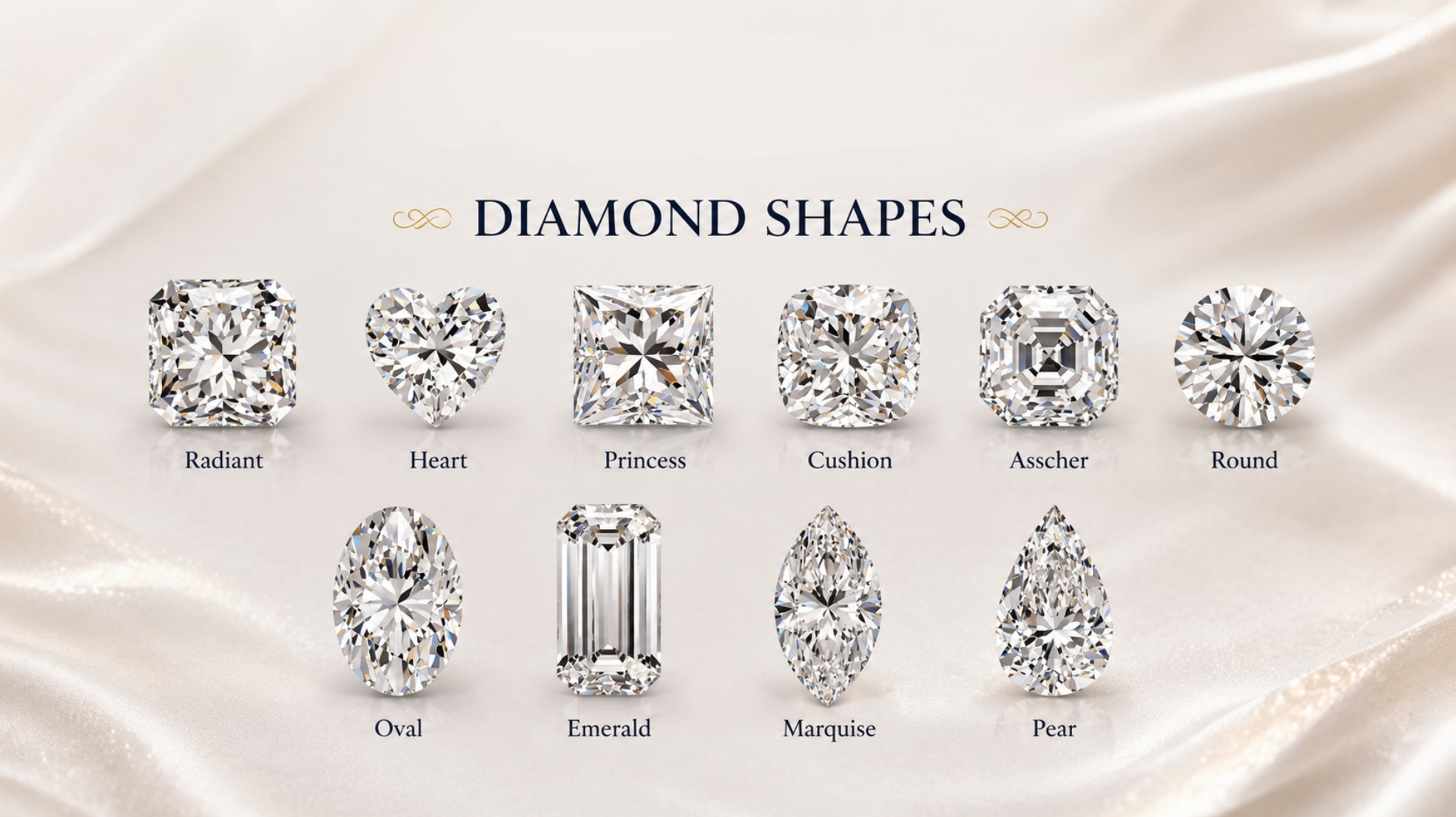
Fancy-shaped diamonds such as:
- Oval
- Emerald
- Cushion
- Pear
- Radiant
- Marquise
are heavily influenced by ratio and outline.
Examples
Oval Diamonds
A balanced ratio creates elegance while minimizing bow-tie visibility.
Emerald Cuts
Precise symmetry and proportions create refined hall-of-mirror reflections.
Cushion Cuts
Ratios influence whether the diamond appears vintage, modern, elongated, or soft.
We guide clients toward ratios that complement:
- finger shape
- design style
- desired appearance
- visual spread
Crown & Pavilion Angles
The Science Behind Sparkle
The interaction between crown and pavilion angles directly affects:
- brilliance
- fire
- scintillation
- light leakage
Even small proportion differences can dramatically change how a diamond performs.
At Traditions, we analyze:
- crown angle
- pavilion angle
- crown height
- pavilion depth
- optical balance
to ensure exceptional light return and visual beauty.
Polish & Symmetry
Precision Matters
Polish
Polish refers to the finishing quality of the diamond’s facets.
Higher polish grades create:
- crisper reflections
- sharper brilliance
- cleaner appearance
Symmetry
Symmetry evaluates facet alignment and precision.
Excellent symmetry contributes to:
- balanced sparkle
- refined reflections
- superior visual performance
These details may appear subtle on reports but have a significant impact in real life
Fluorescence
An Often Overlooked Factor
Fluorescence refers to how a diamond reacts under ultraviolet light.
While faint fluorescence is often harmless, stronger fluorescence can occasionally create:
- haziness
- oily appearance
- reduced transparency
This is carefully evaluated during our selection process.
BGM Diamonds
Brown, Green & Milky Characteristics
Some diamonds may appear:
- brownish
- greenish
- milky
- sleepy
- hazy
despite strong grading reports.
These are commonly referred to as BGM characteristics:
- Brown
- Green
- Milky
At Traditions, every diamond is physically inspected in multiple lighting conditions to ensure:
- crisp brilliance
- transparency
- brightness
- lively sparkle
We avoid diamonds that appear dull or lifeless despite strong certifications
Inclusion Analysis
Not All Inclusions Are Equal
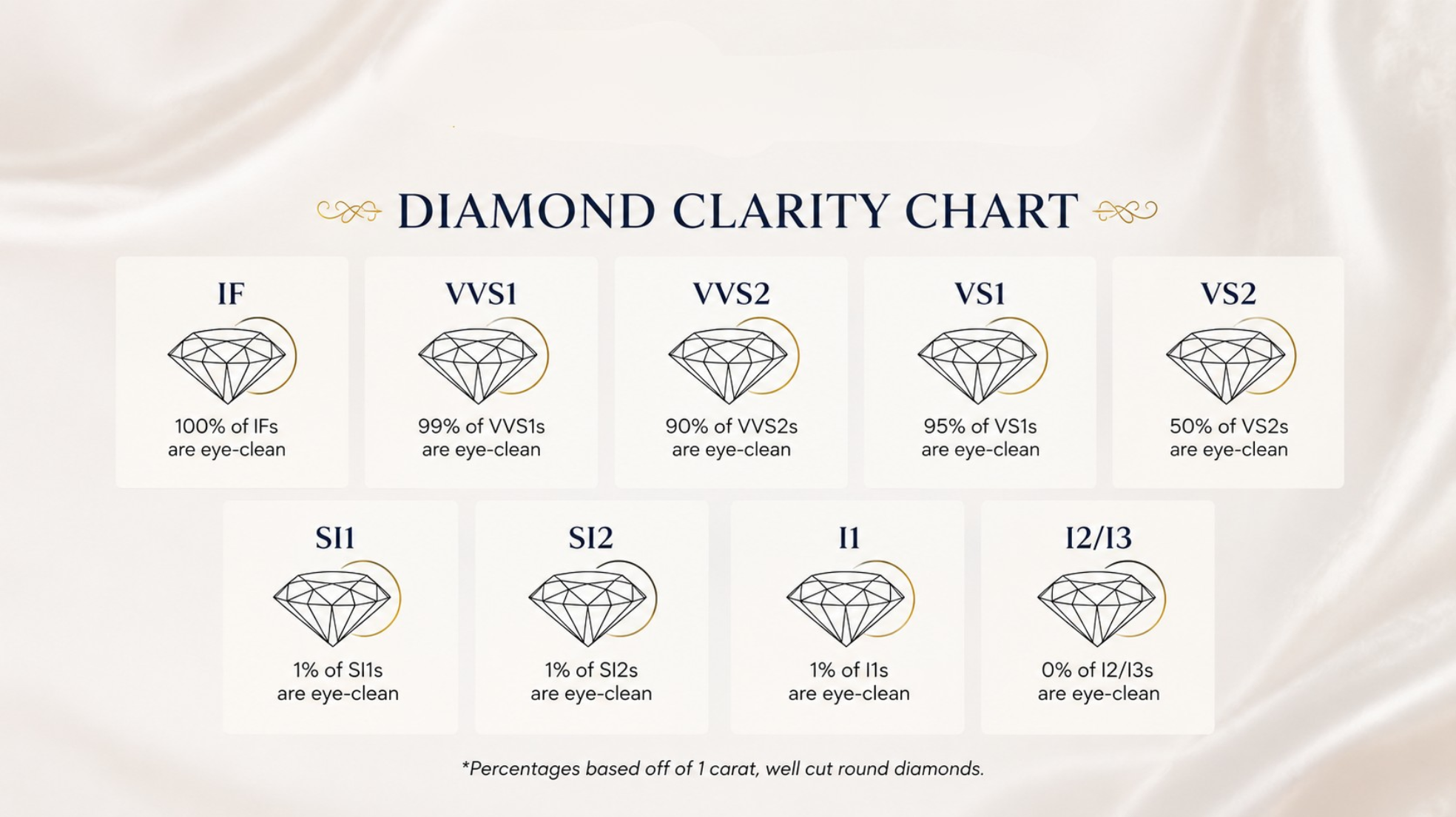
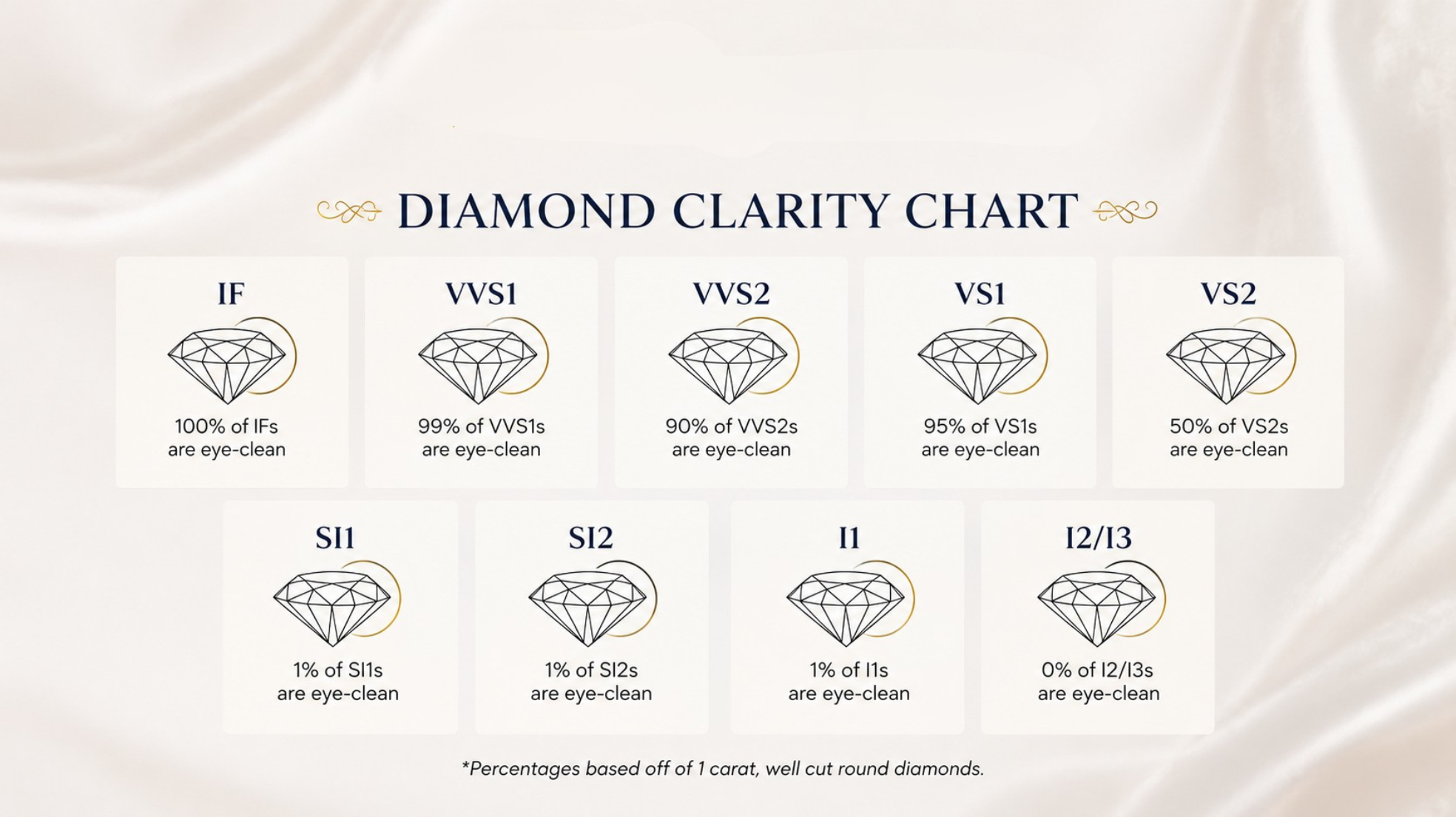
Two diamonds with identical clarity grades can look completely different.
We carefully evaluate:
- black inclusions
- clouds
- feathers
- crystals
- transparency impact
- inclusion location
- durability concerns
The goal is always selecting diamonds that are visually beautiful and eye-clean.
Colored Diamonds
Rare & Extraordinary
Colored diamonds offer a distinctive alternative to traditional white diamonds.
Natural fancy-colored diamonds occur in shades such as:
- Yellow
- Pink
- Blue
- Champagne
- Cognac
- Green
- Black
Their beauty depends on:
- color intensity
- saturation
- distribution
- rarity
- overall visual richness
We help clients source exceptional colored diamonds for bespoke and fine jewelry creations.
Natural & Lab-Grown Diamonds
Both natural and lab-grown diamonds are real diamonds with identical physical and optical properties.
Natural Diamonds
- Formed naturally over billions of years
- Rare and unique
- Traditionally preferred for heirloom jewelry
Lab-Grown Diamonds
- Created using advanced technology
- Offer larger sizes at lower costs
- Increasingly popular in modern jewelry
We guide clients honestly based on:
- priorities
- budget
- rarity
- long-term preferences
- design goals
The Traditions Approach
At Traditions, diamond selection is deeply personalized.
We help clients evaluate factors often overlooked by standard reports, including:
- light performance
- visual spread
- ratio balance
- bow-tie visibility
- BGM characteristics
- fluorescence impact
- transparency
- polish
- symmetry
- real-world brilliance
- overall presence
Our focus is not simply selecting certified diamonds — but selecting diamonds that truly look exceptional.
By Appointment Only
For diamond consultations, engagement rings, bespoke jewelry, or private viewings, we invite you to connect with our team.