

Journal
14K vs 18K Gold for Diamond Jewellery: Durability, Colour and Price

Dhanteras: Friday, 6 November 2026 · Diwali: Sunday, 8 November 2026 · Prices as on 2 November 2026
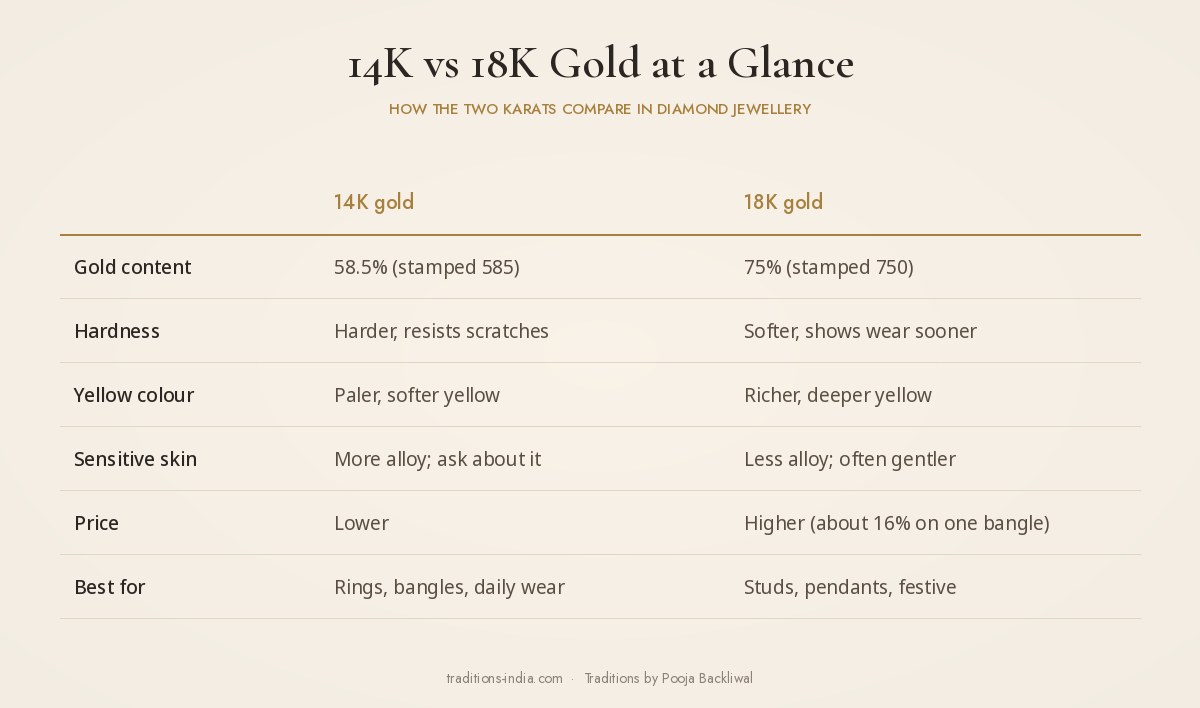
14K vs 18K gold for diamond jewellery comes down to purity and wear. 14K gold is 58.5% gold, so it is harder and better at resisting scratches and bent prongs in rings and bangles worn every day. 18K gold is 75% gold, with a richer yellow and a higher price. Both hold diamonds securely when the setting is well made.
With Dhanteras on Friday and Diwali on Sunday, many families are choosing their first diamond piece of the season, and the karat question comes up in almost every conversation at our Connaught Place office. If you are still deciding what to buy, our Dhanteras diamond jewellery guide covers the occasion; this guide covers the metal underneath the diamonds.
What do 14K and 18K actually mean?
Karat measures how much of an alloy is pure gold, out of 24 parts. 14K gold is 14 parts gold in 24, or 58.5%, which is why it is often stamped 585. 18K gold is 18 parts in 24, or 75%, stamped 750. The rest of the metal is an alloy, usually silver, copper and zinc, with white metals added for white gold. That alloy is not filler: it gives the gold the strength to hold a prong or keep a bangle round.
The karat of a diamond piece has nothing to do with the quality of the diamonds. A 14K ring and an 18K ring can hold identical stones. For the stones themselves, read our guide on how to check diamond quality before buying.
Is 14K or 18K gold more durable?
14K gold is the more durable of the two. With more alloy in the mix, it is harder, so it resists scratches, dents and bending better than 18K. That matters most for the pieces that meet the world first: rings, bangles and cuffs. Prongs and the fine beads that hold pavé diamonds are small pieces of metal, and a harder alloy keeps them in shape for longer.
18K gold is still perfectly wearable. It is softer, so it shows fine scratches sooner and benefits from a slightly heavier setting, but plenty of people wear 18K rings every day. Earrings and pendants take far fewer knocks than rings, so the karat matters less for them.
These two everyday pieces are made in 14K gold, where the extra hardness earns its keep:
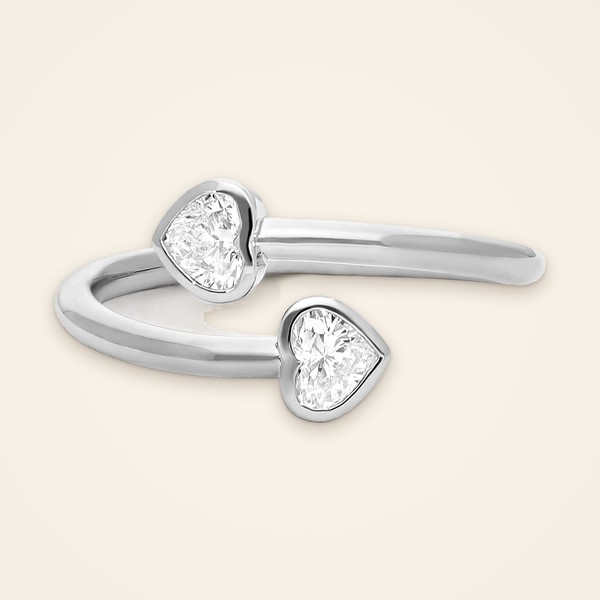
Contemporary Twin-Heart Open Diamond Ring
Diamond Weight: 0.5 ct. tw. · Number of Diamonds: 2 · Diamond Type: Natural Diamond · Diamond Shape: Heart · Measurements: 3.60 x 4.20 mm · Diamond Colour: H-I · Diamond Clarity: SI1 · Setting: Bezel · Design: Open wrap · Metal: 14K gold (yellow, rose or white, your choice)
₹3,12,000 (as on 2 November 2026)
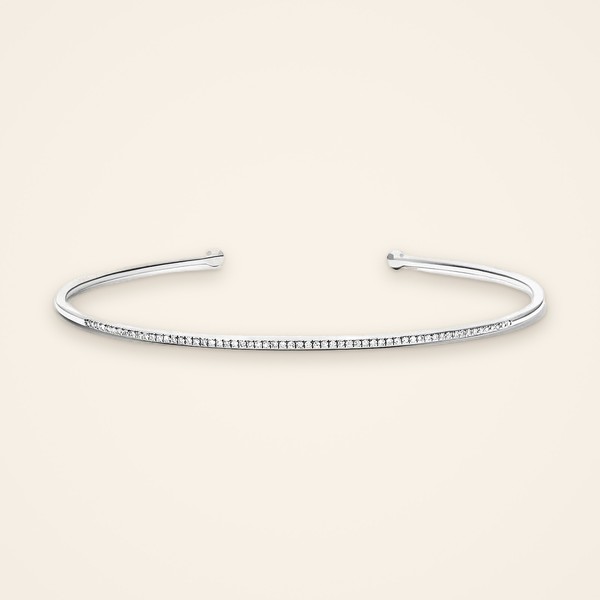
Everyday Fine-Line Diamond Open Cuff
Diamond Weight: 0.16 ct. tw. · Number of Diamonds: 60 · Diamond Type: Natural Diamond · Diamond Colour: G-H · Diamond Clarity: SI1-SI2 · Setting: Pavé · Design: Open cuff · Metal: 14K gold (yellow, rose or white, your choice)
₹1,05,500 ₹1,17,200 sale price, as on 2 November 2026
How does karat change the colour of gold?
More gold means a deeper colour. 18K yellow gold has a warmer, richer yellow that sits close to the traditional gold many Indian families know. 14K yellow gold is a little paler and softer in tone, which many people find easier to wear with everyday clothes and with silver-toned watches.
Rose gold gets its blush from copper in the alloy, so 14K rose gold often shows a slightly stronger pink than 18K rose gold. White gold is gold alloyed with white metals and is usually finished with rhodium plating for a bright white surface; that plating wears with time and can be renewed. Diamonds look bright in all three colours. White metal makes near-colourless diamonds look icier, while yellow gold warms the overall look.
Most Traditions diamond pieces are offered in your choice of yellow, rose or white gold. These two pieces are made in 18K, for a richer gold beside the diamonds:
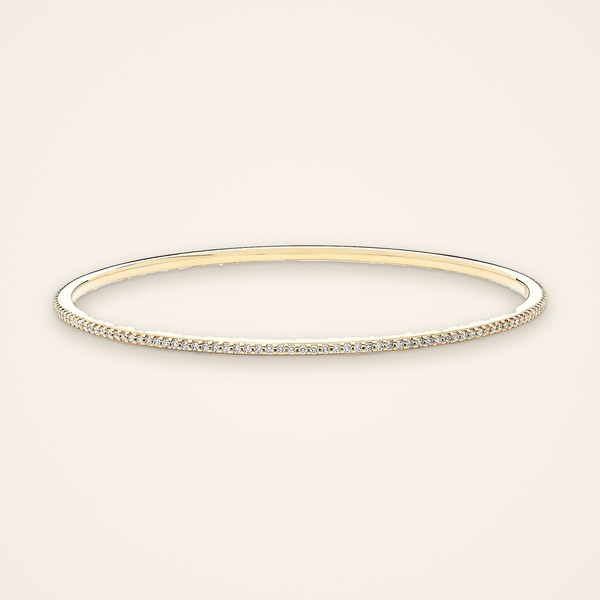
Everyday Layering Pavé Diamond Bangle
Diamond Weight: 1.03 ct. tw. · Number of Diamonds: 147 · Diamond Type: Natural Diamond · Diamond Shape: Round · Diamond Colour: G-H · Diamond Clarity: SI2 · Setting: Pavé · Metal: 18K gold (yellow, rose or white, your choice)
₹3,84,500 ₹4,27,200 sale price, as on 2 November 2026
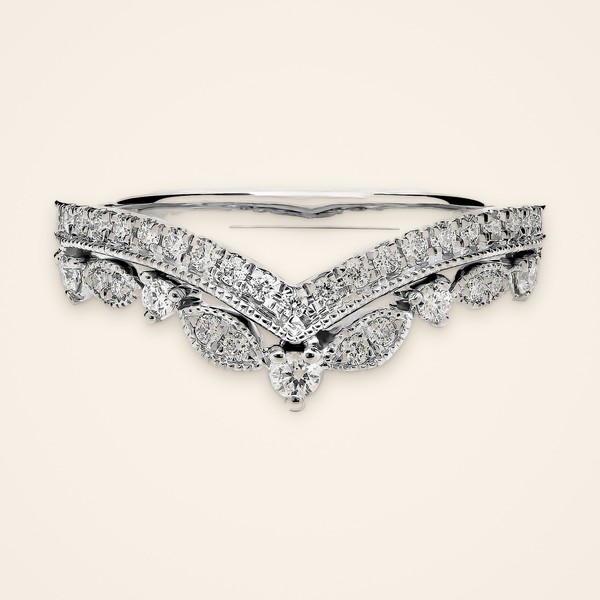
Contemporary Split-Shank Contour Diamond Ring
Diamond Weight: 0.23 ct. tw. · Number of Diamonds: 32 · Diamond Type: Natural Diamond · Diamond Colour: G-H · Diamond Clarity: SI2 · Setting: Prong · Design: Curved band with split sides · Metal: 18K gold (yellow, rose or white, your choice)
₹1,08,700 ₹1,27,900 sale price, as on 2 November 2026
Is 18K gold better for sensitive skin?
It can be. 18K gold contains less alloy, so there is less of the other metals against your skin, and some people with sensitive skin find it more comfortable. White gold alloys vary: some contain nickel, which is the most common cause of metal allergy. If you have a known sensitivity, ask about the alloy before you order rather than assuming every white gold piece is the same. No metal can be promised to suit every wearer.
How much more does 18K gold cost?
18K gold costs more than 14K because it contains more gold, and the gap grows with the weight of the piece. A real example makes this clear. The Everyday Bezel-Set Laboratory-Grown Diamond Oval Bangle is offered in both karats with the same Laboratory-Grown Diamonds and the same design. As on 2 November 2026 it is ₹2,33,600 in 18KT and ₹2,01,400 in 14KT, a difference of ₹32,200, or about 16%.
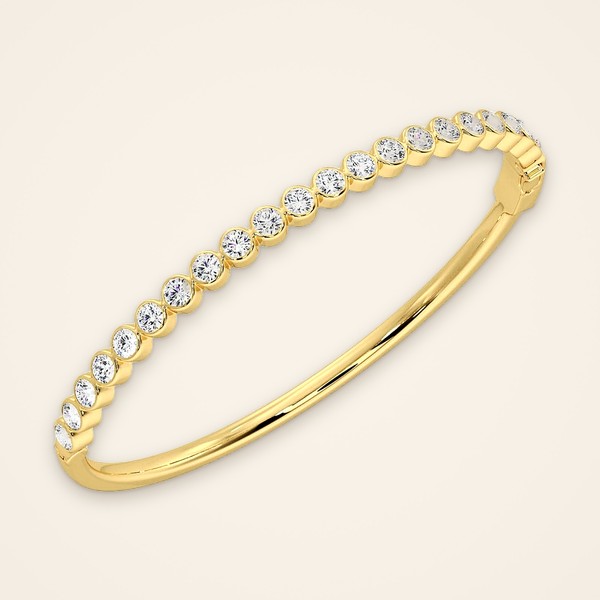
Everyday Bezel-Set Laboratory-Grown Diamond Oval Bangle
Diamond Size: 0.09 ct per stone · Diamond Type: Laboratory-Grown Diamond · Setting: Bezel, single row · Metal: 14KT or 18KT gold in yellow, rose or white (select below)
₹2,01,400 in 14KT · ₹2,33,600 in 18KT (as on 2 November 2026)
On a lighter piece the rupee gap is smaller, and on a heavy bangle or a broad band it is larger. The diamonds usually make up much of the price of a diamond piece, so moving from 14K to 18K changes the total less than many buyers expect. Compare prices on the same design, the same diamond weight and the same setting, so the karat is the only thing that changes.
Which karat should you choose for each piece?
Match the karat to how hard the piece will work.
- Engagement rings and wedding bands: 14K for maximum hardness, or 18K if you want the richer colour and will have prongs checked now and then. Many bridal buyers in India also consider platinum, which we compare with white gold in next week’s guide.
- Bangles, cuffs and bracelets: 14K, because wrists knock against desks, doors and other bangles all day.
- Stud earrings and pendants: either karat works. Choose on colour and budget, since these pieces take few knocks.
- Festive and statement pieces worn now and then: 18K suits pieces where a deeper gold tone matters more than everyday toughness.
For a gift, think about how the person already wears jewellery. Someone who wears her rings every day, including at work and in the kitchen, will get more years from 14K. Someone who wears traditional 22K gold will often prefer the colour of 18K beside it. The 14K pink pearl bracelet below is an easy everyday gift:
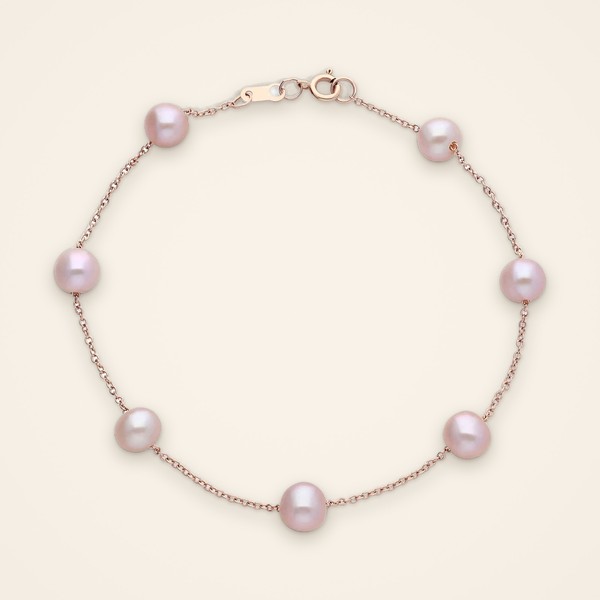
Everyday Pink Pearl Rose Gold Station Bracelet
Pearl: Freshwater Cultured Pearl · Pearl Colour: Pink · Pearl Size: 5.5 mm · Metal: 14K Rose Gold · Chain: Cable, 7.5 inches
₹23,800 ₹28,100 sale price, as on 2 November 2026
What should you check before you buy gold diamond jewellery?
Check the karat stamp and the BIS hallmark. In India, a BIS hallmark shows the purity grade, for example 14K585 or 18K750, along with a six-digit HUID code that identifies the piece. Ask the jeweller to show you the hallmark or tell you where it will appear. Then check the specification sheet for the diamond weight, colour, clarity and setting, and confirm the metal colour you have chosen before the piece is made.
Finally, ask how to care for the piece. White gold may need occasional re-plating, and every prong setting benefits from a periodic check. Our jewellery care guide covers cleaning and storage for gold and diamonds.
Frequently asked questions
Is 14K or 18K gold better for an engagement ring?
Both work. 14K gold is harder, so it resists scratches and keeps prongs in shape better for a ring worn every day. 18K gold has a richer yellow and suits buyers who prefer that colour and are happy to have the setting checked now and then.
Does 14K gold fade or tarnish?
Yellow and rose 14K gold do not fade, although any gold can dull with lotion and soap residue and come back with a gentle clean. White gold is usually rhodium plated, and that plating can wear with time and be renewed.
What is the difference between 585 and 750 gold?
585 is the purity mark for 14K gold, meaning 58.5% gold. 750 is the mark for 18K gold, meaning 75% gold. The rest of each alloy is other metals that add strength and colour.
Is 18K gold worth the extra cost?
It is worth it if you want a deeper gold colour or have sensitive skin and prefer less alloy. For pieces that take hard daily wear, 14K usually gives better value. On the same design at Traditions, 18KT costs about 16% more than 14KT.
Can I choose 14K or 18K for any Traditions piece?
Each product page lists the metal it is made in. Some pieces are offered in a single karat and some, such as Laboratory-Grown Diamond designs, let you select 14KT or 18KT. Message us if you would like a piece in a karat that is not listed.
Choose your karat with Traditions
Browse our diamond rings, diamond bangles and everyday luxury pieces, or book a private appointment at our Connaught Place office in New Delhi to see 14K and 18K side by side. Rings are made to size, and gift packaging is available on request. If you need a piece for a particular date, message us before you order and we’ll tell you whether your piece can reach you in time.
Prices as on 2 November 2026 and subject to change. Last reviewed: 2 November 2026.